6 Steps to Build a Simple Wooden Garden Deck
The smell of fresh-cut lumber and warm soil combine on spring mornings when the ground is finally dry enough to support posts. Building a wooden garden deck transforms access to raised beds, provides clean pathways through vegetable rows, and creates a stable platform for cold frames and potting benches. The steps for building a garden deck require understanding soil compaction, drainage patterns, and the structural biology of pressure-treated lumber. Each board placement affects water movement and mycorrhizal fungi networks beneath the surface. This construction method mirrors the precision required when establishing perennial root systems.
Materials
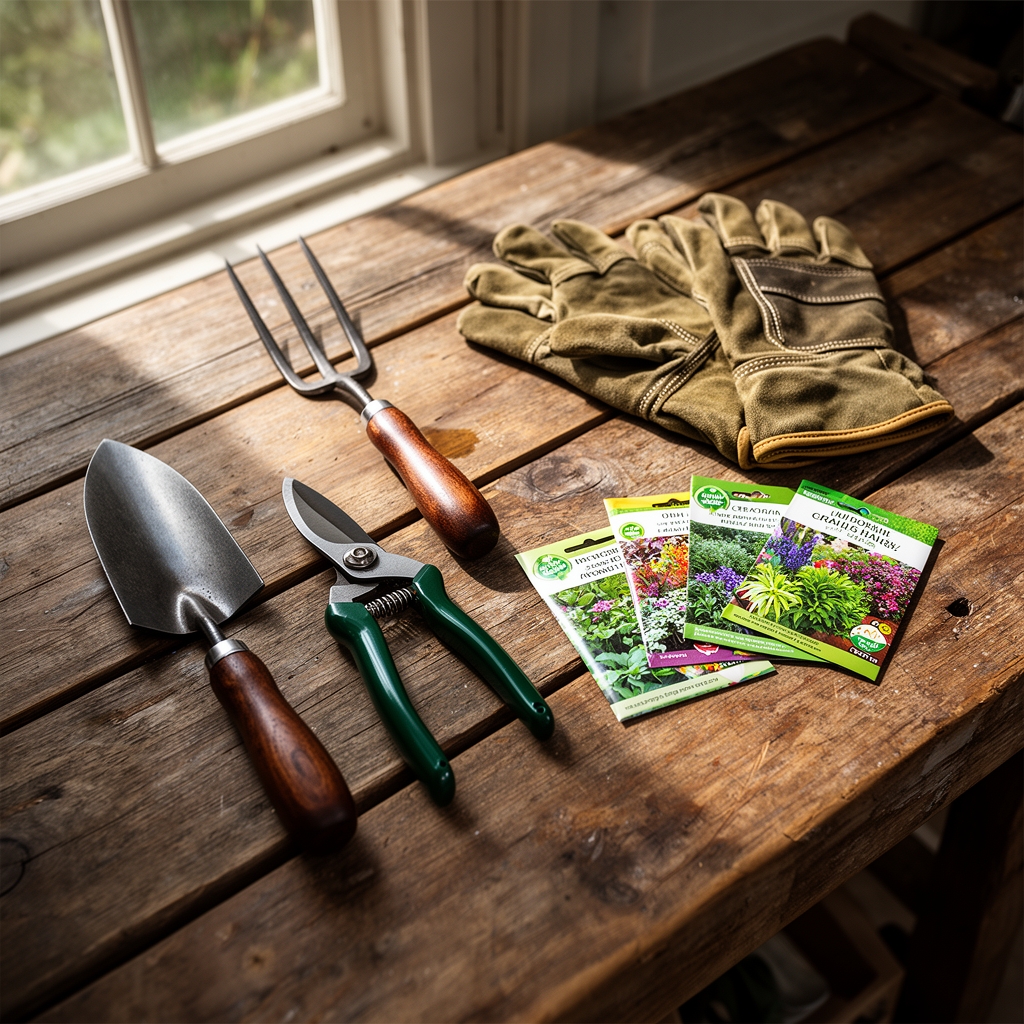
Pressure-treated southern yellow pine rated for ground contact serves as the primary structural material. The copper azole preservatives create a slightly acidic environment (pH 5.8-6.2) that resists fungal decomposition for 15-20 years. Galvanized deck screws (3-inch for joists, 2.5-inch for decking) prevent rust better than nails in humid garden conditions where cation exchange capacity remains high.
Concrete footings (8-inch diameter, 36-inch depth below frost line) anchor the structure against frost heave. Mix concrete at a 1:2:3 ratio (cement:sand:gravel) for compressive strength of 3,000 PSI. Crushed limestone base (4-6 inches) improves drainage beneath the deck surface, maintaining soil pH between 6.5-7.0 for surrounding ornamentals.
Cedar or composite decking boards offer premium alternatives. Cedar contains natural thujaplicins that deter termites and carpenter ants without chemical treatment. Composite materials (60% wood fiber, 40% recycled plastic) eliminate tannin leaching that can temporarily lower soil pH to 5.2 in the drip zone.
Joist hangers, post anchors, and structural brackets require 16-gauge galvanized steel minimum. Landscape fabric (3-ounce woven polypropylene) suppresses weed emergence beneath the structure while allowing gas exchange for soil microorganisms.
Timing
Construction timing follows the same hardiness zone principles as transplanting bare-root stock. Zones 3-5 require completion before October 15 to allow post-hole concrete to cure through three freeze-thaw cycles before winter. Zones 6-7 permit construction through November 30. Zones 8-10 face no frost restrictions but should avoid the wettest months (typically December-February) when soil bearing capacity drops below 1,500 pounds per square foot.
Spring construction (March 15-May 30 in Zones 5-7) allows immediate integration with annual plantings. Soil temperature above 50°F ensures concrete curing without frost damage. Fall construction (September 1-October 31) capitalizes on lower humidity, reducing warp risk in dimensional lumber by 30%.
Phases

Site Preparation Phase: Remove sod and excavate 2 inches below grade across the footprint. Test soil drainage by digging a 12-inch hole, filling it with water, and measuring infiltration. Rates below 1 inch per hour require French drain installation along the perimeter. Mark post locations with stakes at 6-foot intervals (maximum joist span for 2×8 lumber). Check diagonal measurements to confirm square layout; differences exceeding 0.25 inches cause cumulative structural stress similar to auxin distribution imbalances in apical dominance.
Pro-Tip: Dust post holes with rock phosphate (0-3-0) before setting concrete. This improves long-term phosphorus availability for adjacent plantings without creating the nutrient lockout seen with fresh manure applications.
Framing Phase: Install posts plumb within 0.125 inches over 8 feet of elevation. Attach ledger board to existing structures with 0.5-inch lag bolts every 16 inches, maintaining 0.25-inch gaps for water shedding. Cut rim joists from the straightest lumber, crowning any minor bow upward. Space interior joists at 16-inch centers for standard 5.5-inch deck boards, 12-inch centers for diagonal patterns that increase shear load.
Pro-Tip: Apply copper naphthenate to all cut ends before installation. This penetrating fungicide creates a protective zone 0.5 inches deep, matching the critical cambium depth where decay fungi establish.
Decking Phase: Begin installation from the most visible edge, working backward. Leave 0.125-inch gaps between boards (the width of a 16-penny nail) for expansion and water drainage. Stagger end joints by at least 12 inches across adjacent rows, preventing the weak points that mirror root girdling damage patterns. Drill pilot holes 0.75 inches from board ends to prevent splitting comparable to drought-stress radial cracks.
Pro-Tip: Install boards bark-side up (growth rings arcing downward on end grain). This orientation cups water away from the walking surface as wood ages, extending functional lifespan by 4-6 years.
Troubleshooting
Symptom: Boards cupping within first season, creating 0.25-0.5 inch depressions.
Solution: Kiln-dried lumber was installed above 19% moisture content. Remove affected boards during dormant season, dry to 12-15% moisture, reinstall with closer screw spacing (8 inches instead of 12 inches).
Symptom: Black mold colonies appearing on north-facing boards.
Solution: Gloeophyllum species thrive in persistent shade and humidity above 85%. Increase air circulation by trimming overhanging branches to allow 4-6 hours direct light. Apply oxygen bleach solution (1 pound per 2 gallons water) quarterly.
Symptom: Posts heaving 1-2 inches annually.
Solution: Footings terminate above frost line (36-42 inches in Zone 5, 48 inches in Zone 4). Excavate and extend footings, or install helical piers with 1,500-pound capacity ratings.
Symptom: Carpenter ants excavating galleries in rim joists.
Solution: Moisture content exceeds 20% from ground contact or splash-back. Improve grading to slope away at 2% minimum. Treat with borate solution (disodium octaborate tetrahydrate) at 15% concentration.
Symptom: Premature fastener corrosion after 3-4 years.
Solution: Standard galvanized screws react with copper-based preservatives. Replace with stainless steel (304 grade minimum) or coated composite screws rated for ACQ-treated lumber.
Maintenance
Apply penetrating oil finish (linseed or tung oil base) annually before spring rains. Coverage rate: 200-250 square feet per gallon. Sweep debris weekly during growing season to prevent tannin staining and maintain air circulation. Power wash at 1,200 PSI maximum (600 PSI for softwoods) every 24-36 months, working parallel to grain direction.
Inspect joist hangers and structural connections each spring. Tighten any fasteners backed out more than 0.125 inches. Check for soft spots indicating decay by probing with an awl; penetration exceeding 0.25 inches requires sister joist installation or full replacement.
Trim vegetation to maintain 12-inch clearance from deck perimeter. This buffer reduces humidity and prevents organic acid leaching that acidifies pressure-treated wood, accelerating preservative depletion. Mulch beds adjacent to deck should use inorganic materials (gravel, stone) within 18 inches to prevent termite highways.
Replace any board showing crack propagation exceeding 30% of width. Monitor fastener pop-up monthly during first year as lumber acclimates to ambient moisture levels (typically stabilizing at 12-16% in outdoor conditions).
FAQ
How deep should footings extend?
Below frost line for your zone: 36 inches (Zone 5), 42 inches (Zone 4), 48 inches (Zone 3). Shallow footings heave with freeze-thaw cycles.
What joist spacing prevents bounce?
16 inches center-to-center for 5.5-inch deck boards using 2×8 joists. Reduce to 12 inches for composite materials or diagonal patterns.
Can I build directly on gravel?
Only for ground-level floating decks under 200 square feet. Require 6-inch compacted base and concrete blocks every 4 feet.
How long before staining new pressure-treated wood?
Wait 6-12 months for preservatives to cure and moisture content to drop below 15%. Test by sprinkling water; absorption indicates readiness.
What causes white crystalline deposits on boards?
Copper compound leaching during initial weathering. Harmless and temporary. Remove with oxalic acid solution (1 pound per gallon) if aesthetically objectionable.