8 Size-Control Steps to Prune an Indoor Hibiscus
Indoor hibiscus plants often outgrow their designated corners, their glossy leaves pressing against curtains and ceilings within eighteen months of purchase. Controlled size reduction through strategic cuts preserves flowering while keeping the canopy below four feet. The steps for pruning an indoor hibiscus balance apical dominance with lateral bud activation, creating a compact form that channels energy toward bloom production rather than vertical extension. Each cut repositions auxin distribution, the growth hormone that governs stem elongation and branch initiation.
Materials
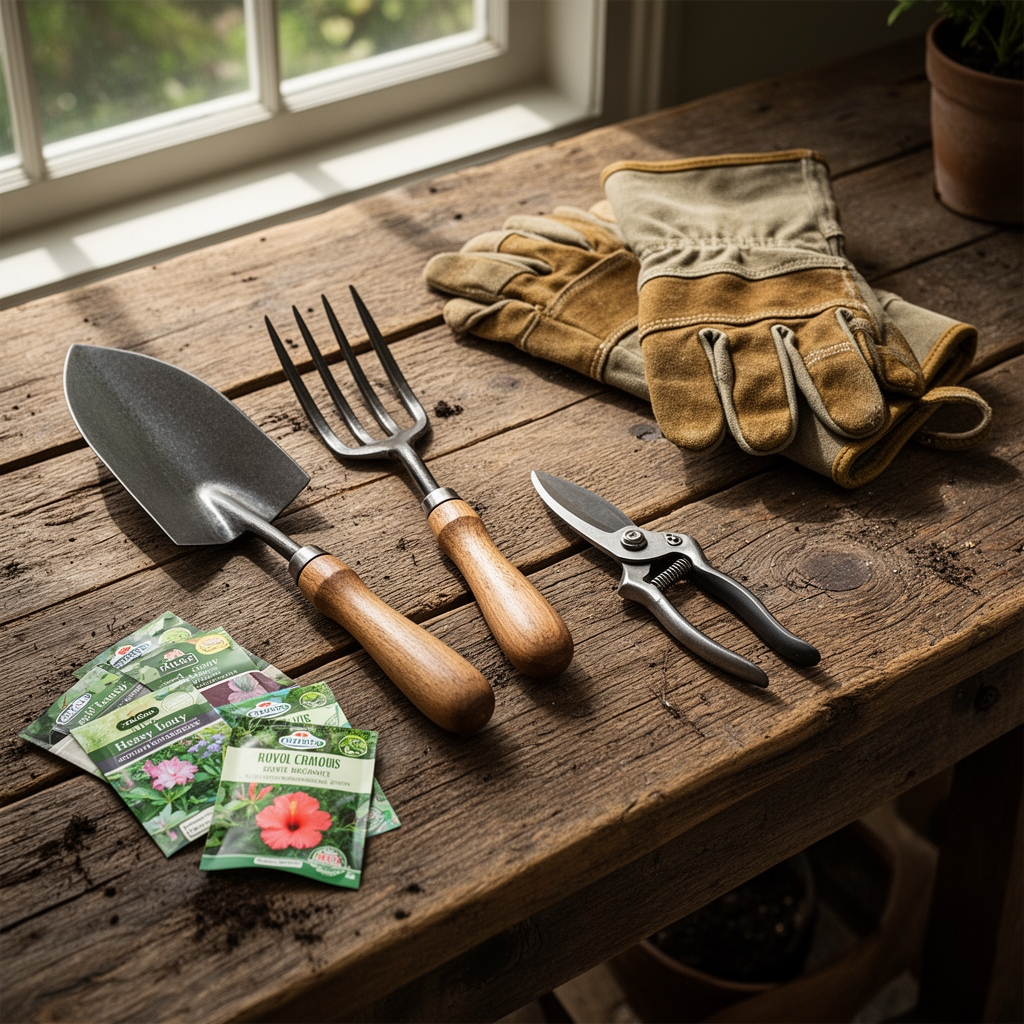
Bypass pruners with 0.75-inch jaw capacity and carbon-steel blades ensure clean cuts through lignified stems. Isopropyl alcohol at 70% concentration sterilizes blades between cuts, preventing anthracnose transmission. Rooting hormone powder containing 0.1% indole-3-butyric acid converts removed tips into propagation stock.
Soil amendments adjust cation exchange capacity after pruning stress. Apply a 4-4-4 organic meal blending feather meal, bone meal, and kelp at 2 tablespoons per gallon of potting volume. This ratio supports vegetative recovery without promoting excessive nitrogen-driven shoot extension. A pH meter calibrated to 6.0-6.5 ensures nutrient availability in the slightly acidic range hibiscus roots prefer. Mycorrhizal inoculant (50 spores per gram minimum) colonizes new root tips that develop post-pruning, increasing phosphorus uptake for bud set.
Timing
Indoor environments lack the hardiness zone frost markers that govern outdoor pruning windows, yet photoperiod still influences recovery speed. Schedule major size reduction during late winter, between February 1 and March 15, when increasing day length triggers renewed apical meristem activity. Hibiscus rosa-sinensis enters semi-dormancy below 60°F, slowing wound callus formation. Maintain ambient temperatures at 65-75°F during the two weeks following cuts.
Avoid pruning during active flowering between May and September. Removing stems with developing buds eliminates bloom potential for six weeks as new laterals mature. Monitor the moon phase for those tracking circadian rhythms; prune during waning periods when sap flow concentrates in roots rather than shoots.
Phases

Assessment Phase: Identify the central leader and four to six primary scaffold branches. Mark stems exceeding the target height with biodegradable tape 0.25 inches above outward-facing nodes. Each node contains axillary buds capable of generating two replacement shoots.
Pro-Tip: Select nodes positioned at 45-degree angles from the trunk. Lateral branches emerging at acute angles create weak crotches prone to splitting under foliage weight.
Reduction Phase: Remove one-third of total stem length per session. Make cuts 0.25 inches above nodes at 30-degree angles sloping away from buds to prevent water accumulation. Avoid leaving stubs longer than 0.5 inches, which become necrotic tissue hosting Botrytis spores. Cut main stems first, then address interior crossing branches that restrict air circulation.
Pro-Tip: Sterilize blades after every third cut. Hibiscus sap carries viral particles that remain infectious on metal surfaces for 48 hours.
Thinning Phase: Remove 20% of interior foliage to increase light penetration to lower nodes. Target leaves with interveinal chlorosis or aphid stippling. Thin branches growing toward the plant's center, maintaining a vase shape with an open crown.
Pro-Tip: Save removed tips longer than 4 inches. Strip lower leaves, dip cut ends in rooting hormone, and insert into perlite-vermiculite mix at 1:1 ratio. Maintain 80% humidity under clear plastic domes.
Troubleshooting
Symptom: Yellow leaves with green veins appearing seven days post-pruning.
Solution: Iron deficiency induced by pruning stress. Apply chelated iron foliar spray at 150 ppm concentration. Adjust soil pH if readings exceed 6.8, which locks iron into unavailable compounds.
Symptom: Black stem tips with fuzzy gray growth at cut sites.
Solution: Botrytis cinerea colonization. Remove affected tissue 1 inch below visible infection. Reduce ambient humidity below 60%. Apply sulfur-based fungicide at 0.5 tablespoon per gallon as preventive drench.
Symptom: Wilting despite moist soil within 48 hours of pruning.
Solution: Root-to-canopy ratio imbalance. Temporary transpiration exceeds root uptake capacity. Mist foliage twice daily with distilled water. Shield plant from direct sun for five days.
Symptom: No new growth from nodes after three weeks.
Solution: Insufficient light activation of auxin pathways. Increase photosynthetic photon flux density to 300-500 µmol/m²/s using full-spectrum LED arrays positioned 12 inches above canopy.
Maintenance
Water when the top 2 inches of soil reach dry to the touch, delivering 0.5 gallons per 10-inch pot diameter. Pruned plants require 30% less water during the two-week recovery window due to reduced transpiration surface area.
Feed every 14 days with liquid fertilizer at 10-10-10 NPK ratio diluted to 200 ppm nitrogen. Resume standard monthly feeding schedules once five new leaves emerge per pruned stem.
Rotate containers 90 degrees weekly to ensure even light exposure on regenerating laterals. Monitor for spider mites, which colonize stressed plants within 72 hours. Inspect leaf undersides with a 10x hand lens.
FAQ
How much can I prune without killing the plant?
Remove up to 40% of total biomass in a single session. Hibiscus rosa-sinensis tolerates hard pruning due to adventitious bud reserves along mature stems.
When will flowers return after pruning?
New blooms appear 6-8 weeks post-pruning on laterals reaching 6 inches length with five mature leaves.
Can I prune during winter?
Yes, if indoor temperatures remain above 65°F and supplemental lighting provides 12-hour photoperiods.
Should I seal cut surfaces?
No. Pruning sealants trap moisture and inhibit natural callus formation. Allow wounds to air-dry for 24 hours.
Why are new shoots leggy?
Insufficient light intensity. Increase photon flux or move plant within 18 inches of south-facing windows.