7 Proven Steps to Trellis Pickling Cucumbers
Healthy cucumber leaves possess a high degree of turgor pressure; they feel rigid and cool to the touch as water moves through the vascular xylem. The smell of damp, well-aerated earth signals a high microbial activity within the rhizosphere. Transitioning to vertical growth is the most efficient way to maximize yield in limited space. Understanding the specific steps to trellis pickling cucumbers ensures better airflow and reduces the incidence of foliar pathogens. Vertical cultivation prevents the fruit from resting on the soil, which eliminates yellowing and belly rot while simplifying the harvest of small, firm pickling specimens.
Materials:
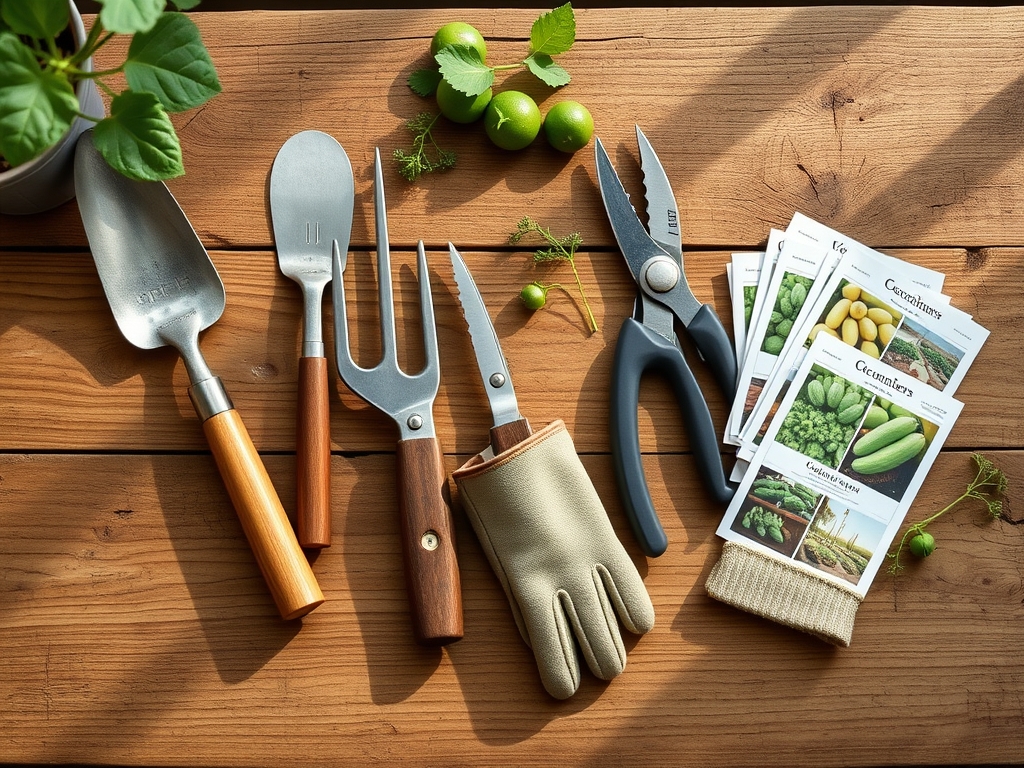
Pickling cucumbers (*Cucumis sativus*) require a highly fertile, friable loam with a **Cation Exchange Capacity (CEC) above 15**. The soil pH must be maintained between **6.0 and 6.8** to ensure the availability of micronutrients like manganese and iron. Prepare the site with a balanced organic fertilizer featuring an **NPK ratio of 5-10-10** prior to planting. High nitrogen levels at the start can lead to excessive leaf production at the expense of fruit. You will need a vertical structure at least **6 feet tall**, heavy-gauge cattle panels or nylon netting, and soft jute twine for initial training.
Timing:
Successful trellising depends on the biological clock of the plant, specifically the transition from the vegetative stage to the reproductive stage. In Hardiness Zones 4 through 9, do not transplant until the soil temperature consistently reaches 65 degrees Fahrenheit. Seeds germinate most efficiently when the substrate is between 70 and 95 degrees Fahrenheit. Cucumbers are day-neutral plants, but they require high light intensity for photosynthesis to drive the production of female flowers. Monitor the frost-date window; a single exposure to temperatures below 32 degrees Fahrenheit will cause cellular rupture and immediate plant senescence.
Phases:

Sowing and Germination
Direct sow seeds 1 inch deep into the prepared friable loam. Space seeds 6 inches apart along the base of your trellis. If starting indoors, use biodegradable peat pots to minimize root disturbance during the transplant process.
Pro-Tip: Maintain consistent moisture to prevent the seed coat from hardening. The biological why involves imbibition; the seed must absorb water to activate the metabolic enzymes required for the embryo to break dormancy.
Transplanting and Hardening Off
If you started seeds indoors, harden them off for 7 to 10 days by gradually increasing their exposure to UV light and wind. Dig a hole twice the size of the root ball and backfill with soil amended with compost. Ensure the cotyledons are just above the soil line.
Pro-Tip: Water with a seaweed-based solution to reduce transplant shock. The biological why involves auxin suppression; the plant needs to redirect energy from upward growth to lateral root development to establish a strong foundation.
Establishing the Lead Vine
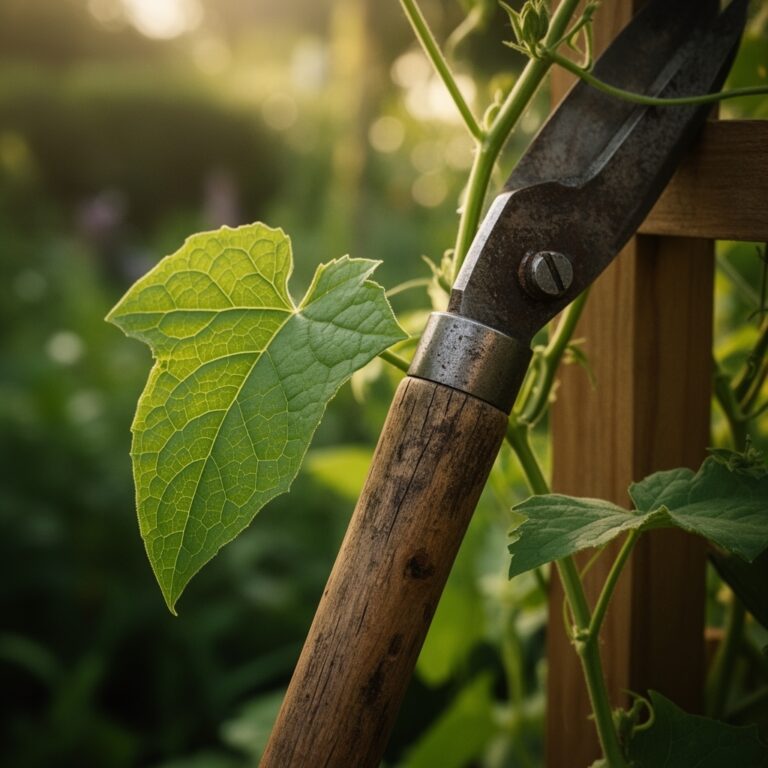
Once the plant reaches 12 inches in height, it will begin producing tendrils. These specialized stems use thigmotropism to wrap around any physical support they touch. Manually guide the main leader onto the trellis using loose jute twine loops.
Pro-Tip: Avoid tight knots that can girdle the stem. The biological why is vascular flow; constricting the stem restricts the movement of sugars from the leaves to the roots via the phloem.
Lateral Pruning
As the cucumber grows, it will produce lateral branches or "suckers" from the leaf axils. For vertical trellising, prune the first 3 to 4 lateral branches to focus energy on the primary vine.
Pro-Tip: Use a sterilized bypass pruner for clean cuts. The biological why is apical dominance; by removing lower laterals, you encourage the plant to put its resources into vertical extension and early fruit set.
Managing Pollination
Pickling cucumbers often produce separate male and female flowers on the same plant. Ensure the trellis is in a location with high pollinator traffic. If the trellis is inside a high tunnel, you may need to hand-pollinate or use parthenocarpic varieties.
Pro-Tip: Plant flowering herbs nearby to attract bees. The biological why involves pollen tube growth; once a bee deposits pollen on the stigma, the plant requires adequate calcium to grow the tube down to the ovary.
Fruit Loading
As fruit develops, the weight on the trellis increases significantly. Check the structural integrity of your cattle panels or netting. Pickling cucumbers should be harvested when they are 2 to 4 inches long for the best texture and seed size.
Pro-Tip: Harvest frequently to prevent the plant from entering a state of reproductive rest. The biological why is ethylene signaling; leaving overripe fruit on the vine signals the plant to stop producing new flowers.
Post-Harvest Care
After the final harvest, remove all plant debris from the trellis to prevent the overwintering of pathogens. Inspect the trellis for damage and store any nylon netting in a dry place to prevent UV degradation.
Pro-Tip: Clean your tools with a 10 percent bleach solution. The biological why is pathogen sequestration; many fungal spores can survive on metal and wood surfaces through the winter months.
The Clinic:
Physiological disorders often manifest as visible changes in the foliage or fruit.
- Symptom: Interveinal chlorosis (yellowing between green veins) on older leaves.
- Solution: This indicates a Magnesium deficiency. Apply Epsom salts (magnesium sulfate) at a rate of 1 tablespoon per gallon of water as a soil drench.
- Symptom: Gummy stem blight or lesions on the vine.
- Solution: Improve airflow by further thinning the canopy and ensure the soil pH is not too acidic.
- Symptom: Misshapen or "wasp-waisted" fruit.
- Solution: This is usually due to incomplete pollination or inconsistent moisture. Use a soil moisture meter to ensure the root zone stays hydrated.
- Fix-It: For Nitrogen chlorosis (general paling of the entire plant), side-dress with a high-nitrogen organic meal. Nitrogen is essential for chlorophyll production and protein synthesis.
Maintenance:
Precision is required for high-yield trellising. Provide 1.5 inches of water per week at the drip line; do not use overhead irrigation as wet foliage encourages powdery mildew. Use a hori-hori knife to remove deep-rooted weeds that compete for nutrients in the top 6 inches of soil. Monitor the soil with a soil moisture meter daily during heat waves. If the meter reads below 40 percent, increase irrigation frequency. Use bypass pruners to remove any yellowing leaves (senescence) at the base of the plant to maintain vertical airflow.
The Yield:
Harvest pickling cucumbers early in the morning when turgor pressure is at its peak. This ensures the fruit is crisp and firm. Use scissors or pruners to cut the stem; pulling the fruit can damage the delicate vine. To maintain "day-one" freshness, immediately submerge harvested cucumbers in an ice-water bath for 20 minutes to remove field heat. This slows down the respiration rate and preserves the cellular structure for the pickling process. Store in a refrigerated environment at 45 to 50 degrees Fahrenheit.
FAQ:
How high should a cucumber trellis be?
A trellis should be 5 to 6 feet tall. Most pickling varieties will easily reach this height within 60 days of planting. Robust support prevents the vine from collapsing under the weight of the developing fruit.
Can I trellis bush-style pickling cucumbers?
Bush varieties are bred for compact growth and typically do not require trellising. However, using a small 2-foot cage can help keep the fruit off the soil and improve air circulation around the main stem.
Why are my cucumbers bitter?
Bitterness is caused by cucurbitacin, a compound produced when the plant is stressed. Maintain consistent soil moisture and provide a thick layer of mulch to regulate soil temperature and prevent the roots from overheating.
When should I start training the vines?
Begin training as soon as the plant produces its first two or three tendrils, usually when the vine is 12 inches long. Use soft ties to secure the main lead to the lowest wire of the trellis.