7 Best Grow Light Bulbs for Standard Home Fixtures
The morning sun through your east window fails to reach the fiddle-leaf fig in your corner office. Your basement seedlings stretch pale and leggy toward the ceiling. The best grow light bulbs for standard lamps solve these problems by screwing directly into desk lamps, floor fixtures, and clamp lights you already own. No complicated installation. No rewiring. These bulbs deliver the photosynthetically active radiation your plants need while fitting E26 and E27 sockets found in 90% of household fixtures.
Materials
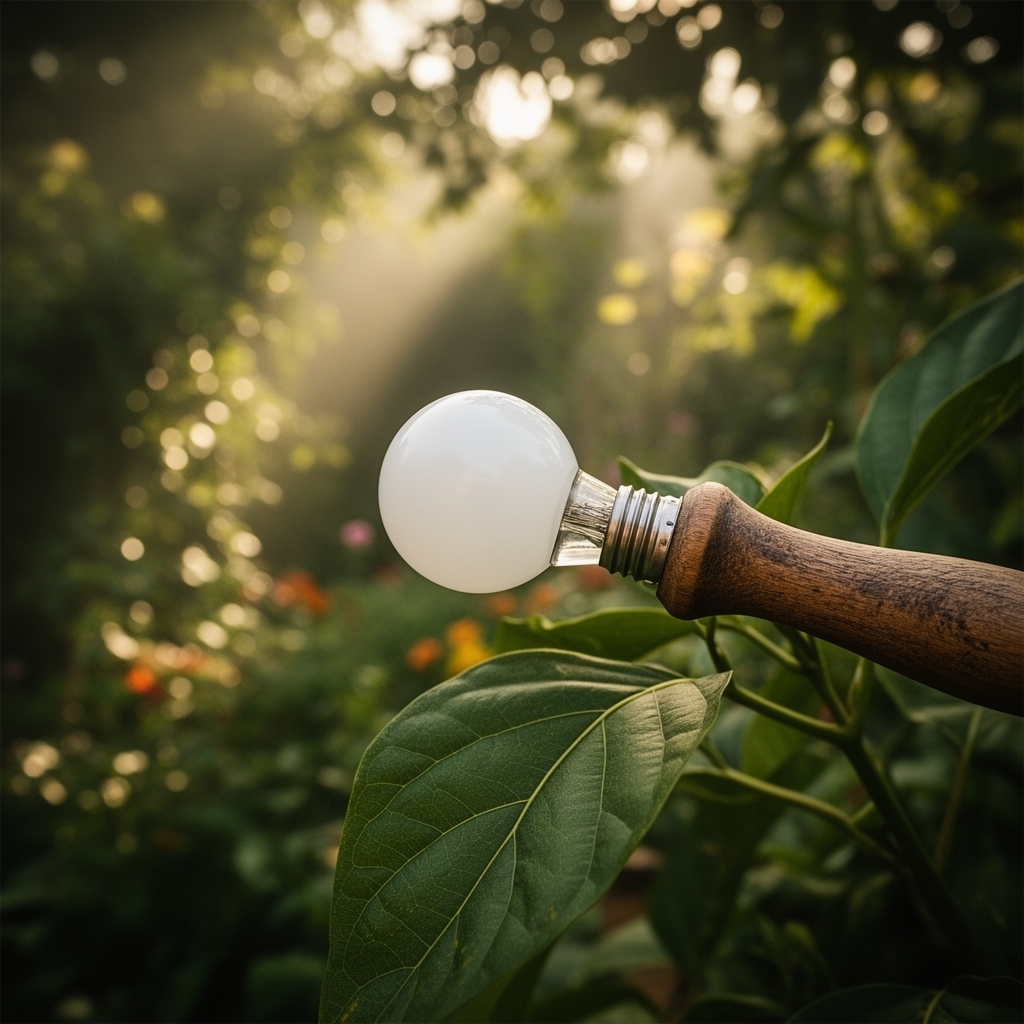
Full-Spectrum LED Bulbs (9-12 watts): These provide 400-700 nanometer wavelength coverage. The spectrum includes blue peaks at 450nm for vegetative growth and red peaks at 660nm for flowering. Expect 800-1200 lumens output and 50,000-hour lifespans. Compatible with dimmer switches rated for LED loads.
Red-Blue Bicolor LED Bulbs (15-24 watts): Higher intensity models emit concentrated wavelengths that target chlorophyll A and B absorption peaks. These produce 1500-2000 lumens with pronounced magenta hues. Use for fruiting crops requiring high light intensity like tomatoes and peppers.
Warm White LED Grow Bulbs (10-15 watts): Color temperature ranges from 2700K to 3000K. These blend seamlessly into living spaces while providing adequate photosynthetic photon flux density (PPFD) of 25-40 micromoles per square meter per second at 12 inches. Ideal for low-light tropicals including pothos and philodendron species.
Daylight LED Grow Bulbs (12-18 watts): Operating at 5000K to 6500K, these mimic midday summer sun. They deliver blue-heavy spectrums that prevent etiolation in seedlings. Use during propagation phases when auxin distribution must favor compact internodal spacing.
CFL Grow Bulbs (23-42 watts): Compact fluorescent technology remains viable for budget builds. These spiral bulbs provide 1600-2800 lumens but generate more heat per lumen than LED alternatives. Maintain 6-8 inch distances to prevent heat stress.
Halogen Grow Bulbs (40-75 watts): High-intensity discharge technology in standard bulb format. These produce significant infrared radiation and consume more electricity. Reserve for plants requiring photoperiodic triggers or high-PPFD environments exceeding 100 micromoles.
Smart Spectrum LED Bulbs (18-24 watts): Programmable bulbs with app controls adjust color temperature and intensity throughout the day. Set blue-heavy morning periods for stomatal opening, then transition to red-enriched evening spectrums for flowering hormone production.
Timing
Deploy grow light bulbs year-round in USDA Hardiness Zones 3-11 based on natural light deficits. Northern growers in Zones 3-5 require supplemental lighting from October through March when day length drops below 10 hours. Zones 6-7 benefit from November to February supplementation. Southern zones use grow lights primarily for interior spaces lacking south-facing windows.
Install bulbs 4-6 weeks before your last frost date when starting seedlings indoors. In Zone 5, this means mid-February for April 15 transplant dates. Zone 7 gardeners begin mid-January for March 1 planting windows.
Photoperiod management matters for specific crops. Provide 14-16 hours daily for vegetative growth in tomatoes, brassicas, and leafy greens. Reduce to 12 hours for flowering initiation in short-day plants like chrysanthemums and poinsettias.
Phases
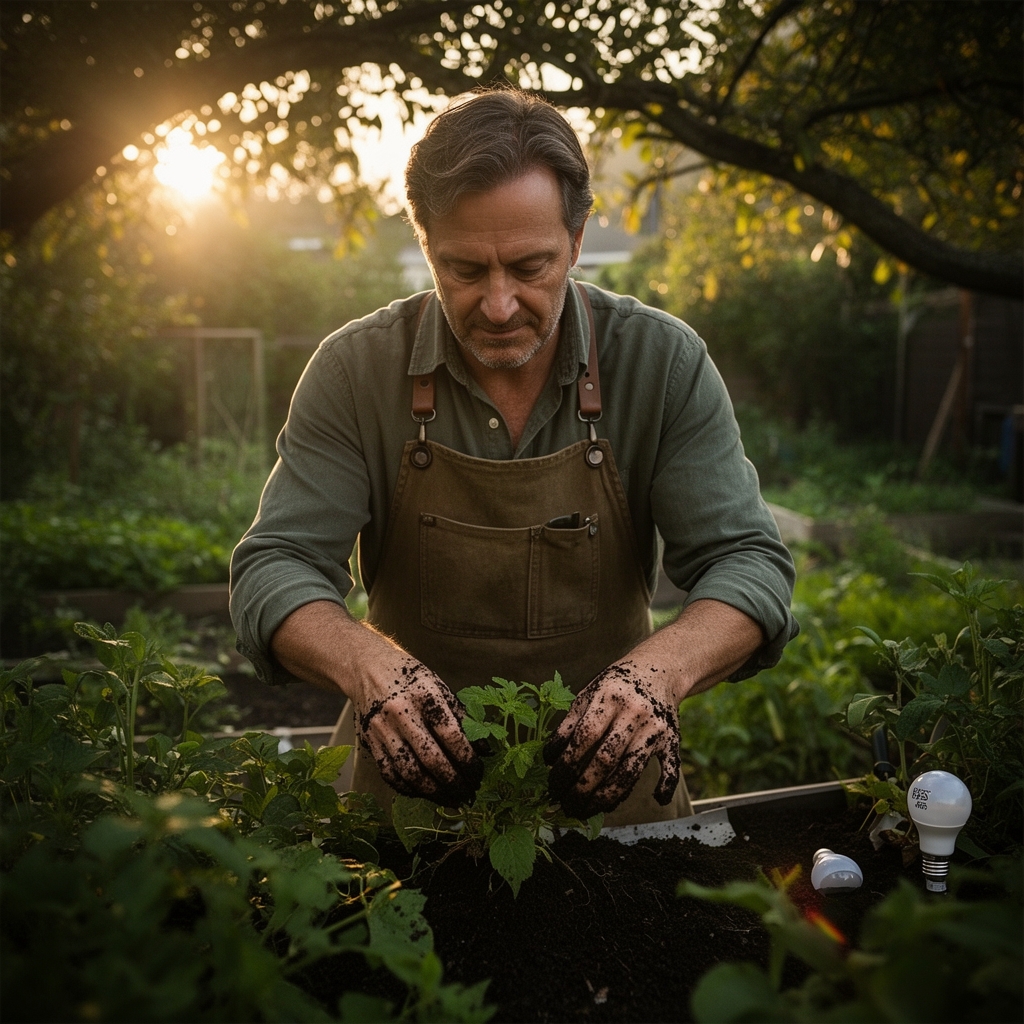
Seed Starting Phase: Position bulbs 4-6 inches above seed trays. Maintain 16-hour photoperiods with daylight spectrum bulbs (5000K-6500K). Soil temperature should reach 70-75°F for solanaceous crops, 60-65°F for brassicas. Germination occurs in 5-14 days depending on species.
Pro-Tip: Apply mycorrhizal fungi inoculant to growing medium before seeding. This establishes symbiotic relationships that increase phosphorus uptake by 60-80% during critical early root development.
Transplant Hardening Phase: Gradually reduce light intensity over 7-10 days before transplanting. Move bulbs to 12 inches above plants during week one, then 18 inches during week two. Simultaneously decrease daily photoperiod from 16 to 14 hours. This triggers cuticle thickening and prepares plants for UV exposure.
Pro-Tip: Prune cotyledons at 45-degree angles once true leaves fully expand. This redirects auxin distribution toward apical meristem development rather than maintaining embryonic tissue.
Establishment Phase: For permanent indoor plants, maintain bulbs at fixed distances based on crop requirements. Low-light houseplants thrive with bulbs 24-36 inches away providing 25-50 foot-candles. High-light crops need 6-12 inch distances delivering 200-400 foot-candles. Monitor leaf temperature with infrared thermometer. Keep surfaces below 80°F to prevent stomatal closure.
Pro-Tip: Rotate potted plants 90 degrees weekly to ensure uniform light distribution across all foliage. This prevents phototropic bending and maintains balanced cation exchange capacity throughout root zones.
Troubleshooting
Symptom: Interveinal chlorosis on new growth. Yellowing between leaf veins while veins remain green.
Solution: Iron deficiency caused by high substrate pH above 7.0. Apply chelated iron at 150 ppm. Lower pH to 6.0-6.5 using elemental sulfur at 1 pound per 100 square feet.
Symptom: Purple or reddish leaf undersides with stunted growth.
Solution: Phosphorus deficiency exacerbated by cold root zones below 60°F. Increase ambient temperature. Apply monoammonium phosphate (11-52-0) at half-strength weekly until color normalizes.
Symptom: Leaf edges browning and curling upward.
Solution: Light burn from excessive PPFD or heat. Raise bulbs 6-12 inches. Verify leaf surface temperature stays below 77°F using infrared measurement.
Symptom: Leggy growth with elongated internodes despite adequate light hours.
Solution: Incorrect spectrum. Switch from warm white (2700K) to daylight spectrum (6500K) bulbs. Increase blue wavelength exposure to 450-475nm range to inhibit cell elongation.
Symptom: Fungus gnats circling base of plants.
Solution: Overwatering creates anaerobic conditions. Allow top 2 inches of substrate to dry completely between waterings. Apply Bacillus thuringiensis israelensis (BTI) drench at labeled rates.
Maintenance
Water when soil moisture probe reads 40% at 4-inch depth. This typically requires 0.5-1 inch of water weekly for 6-inch pots, adjusted for temperature and humidity. Maintain 40-60% relative humidity for most houseplants using room humidifiers if necessary.
Clean bulb surfaces monthly. Dust accumulation reduces light transmission by 15-25%. Wipe with dry microfiber cloth while bulbs are cool.
Replace LED bulbs after 30,000-40,000 hours or when output diminishes by 30%. This occurs after 3-5 years of 12-hour daily operation. CFL bulbs require replacement at 8,000-10,000 hours.
Feed every 14 days with balanced liquid fertilizer (15-15-15) diluted to 150-200 ppm nitrogen. Increase to 200-250 ppm during active growth phases. Flush substrate monthly with pH-adjusted water to prevent salt accumulation.
FAQ
What distance should I keep grow light bulbs from plants?
Maintain 6-12 inches for high-light crops, 12-18 inches for medium-light plants, and 24-36 inches for low-light species. Measure leaf surface temperature with infrared thermometer to confirm it stays below 77°F.
Can I use regular LED bulbs instead of specialized grow bulbs?
Standard LEDs lack sufficient red spectrum wavelengths above 630nm required for flowering. They may sustain low-light foliage plants but will not support fruiting or compact growth.
How many hours should I run grow lights daily?
Provide 14-16 hours for vegetative growth and seedlings, 12 hours for flowering, and 8-10 hours for low-light tropical species. Use timers for consistent photoperiods.
Do grow light bulbs increase my electricity bill significantly?
A 12-watt LED bulb running 14 hours daily costs approximately $0.25 weekly at average U.S. electricity rates of $0.13 per kilowatt-hour. Annual cost per bulb is roughly $13.
Will grow bulbs work in enclosed fixtures?
Verify bulb specifications list enclosed fixture compatibility. LED bulbs generate less heat but still require air circulation. CFL and halogen bulbs should not be used in fully enclosed fixtures due to heat buildup exceeding safe operating temperatures.